How to Stop Overthinking at Work: A Practical 3-Step Reset for Busy Professionals
Chris Mamone

It is 4:40 on a Tuesday and you have not sent the email. You have read it six times. You changed "I think" to "I believe" and back again. You drafted a Slack message to your manager, deleted it, and drafted a slightly softer version. The work itself would have taken four minutes. The thinking about the work has eaten your afternoon.
If that sounds familiar, you are not disorganized or indecisive. You are caught in a loop, and loops feel productive from the inside. That is what makes them so sticky. This is the most common thing I work on with busy professionals, entrepreneurs, and parents who are holding a lot at once. So let me show you exactly how to stop overthinking at work, not by becoming a calmer person with more time, but by using a short, repeatable reset you can run in the middle of a normal, noisy day.
First, name what kind of overthinking you are actually doing
"Overthinking" gets used as one word for at least three different experiences, and each one needs a different response. If you skip this step, you will keep applying the wrong fix. For example, people who are looping on a decision often try to relax, when what they need is a deadline. People who are spiraling on a fear often try to push through, when what they need is to separate the story from the facts.
Here is how I sort them with clients. Read the three descriptions and pick the one that matches your last stuck moment.
| Type | What it sounds like in your head | What it actually needs |
|---|---|---|
| Analysis loop | "But if I say it this way, he might think... and then she might..." | A decision rule and a clock |
| Rehearsal loop | "I need to prepare for every possible version of this conversation" | A first move small enough that you cannot prepare it to death |
| Story loop | "They have not replied, which means I messed up, which means..." | Facts separated from interpretation |
Most busy professionals cycle through all three in a single day. That is normal. What matters is noticing which one has you right now, because each one gets a slightly different entry point into the reset below.
The 10-minute reset: how to stop overthinking at work without adding another system
I want to be honest about something up front. You do not need a new app. If you are already dealing with tool overload, the last thing you need is a productivity method that requires a dashboard. This reset uses a notebook, a timer, and about ten minutes. It works on the same day you learn it, and it gets easier with repetition.
Step 1: Get the loop out of your head and onto paper (3 minutes)
Set a timer for three minutes and write down every thought in the loop without filtering or organizing it. Do not try to solve anything yet. The goal is simply to empty the mental buffer so you can see what you are dealing with.
Example: A client I will call Dana, a marketing lead and mother of two, was stuck on whether to ask her boss for a flexible Friday. Her three minutes of writing produced roughly this: "He will think I am not committed. But I have been working evenings. If I do not ask, I will keep resenting this. What if he says yes but quietly marks me down?" Notice how much of that is fear and how little of it is an actual question.
That is the point. On paper, the loop gets smaller. In your head, it grows because it has no edges.
Step 2: Sort the page into facts and stories (4 minutes)
Go back through what you wrote and mark each line with an F for fact or an S for story. A fact is something a camera could record. A story is an interpretation, prediction, or assumption.
"He has not replied to my message from yesterday" is a fact. "He is annoyed with me" is a story. "I have worked three evenings this week" is a fact. "I am about to be seen as unreliable" is a story.
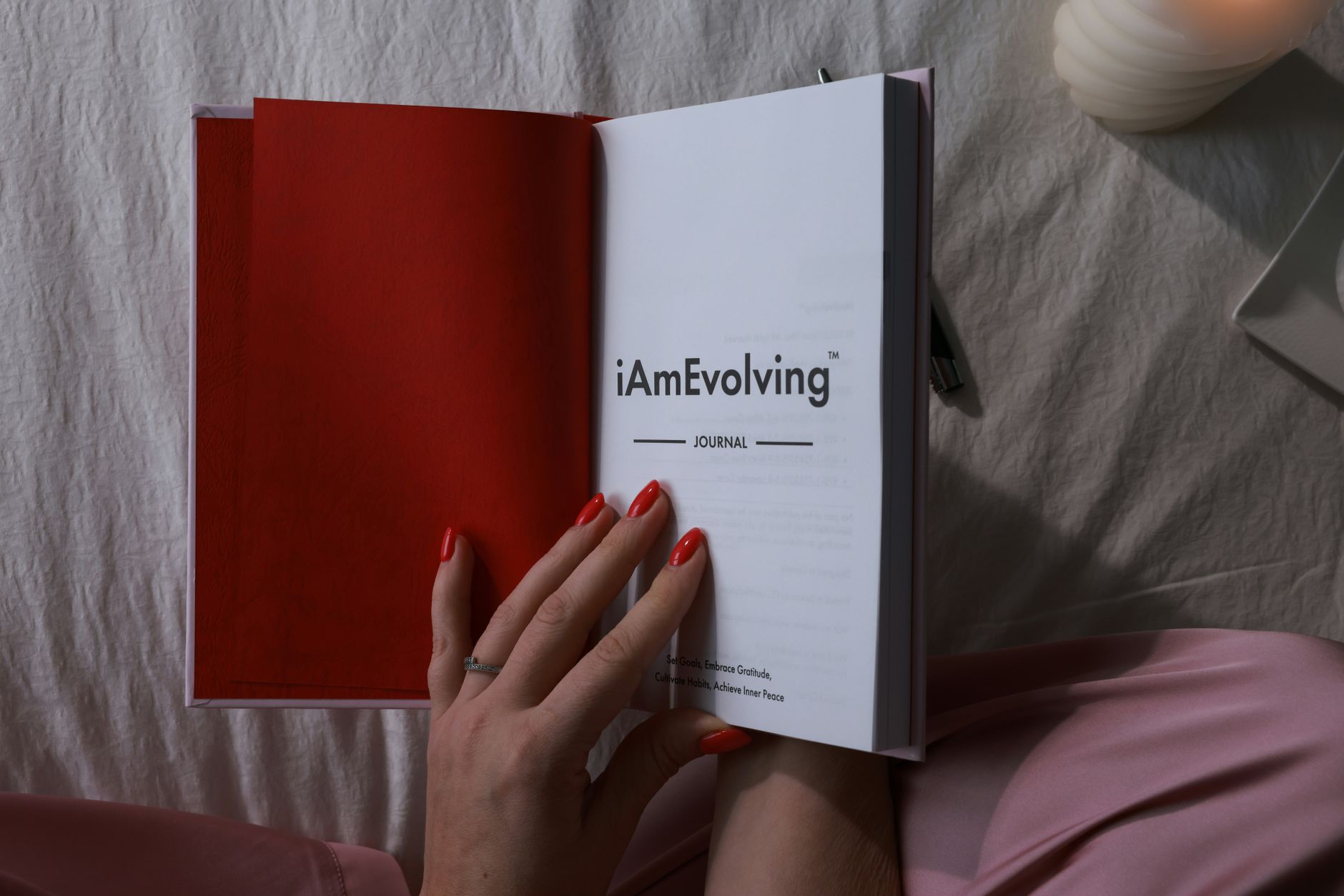
This step is usually where the relief hits. Not because the stories disappear, but because you can suddenly see how much of your afternoon was spent arguing with a prediction rather than responding to a situation. You are not talking yourself out of your concern. You are just putting it in the right category so you can act on the part that is real.
If you find that a line is genuinely a fact you do not know yet, write a small action next to it. "I do not know if the budget was approved" becomes "Ask Priya by Thursday." Now the unknown has a home instead of a loop.
Step 3: Choose one move and give it a deadline (3 minutes)
Write down the single next action that would move this forward, plus a time it will be done. Not a project. One move. "Send the email by 9:30 tomorrow." "Ask the question in the 1:1." "Write the ugly first draft for 25 minutes at 2pm."
Then apply one decision rule so the loop has something to bump into. My clients choose from three:
- The good enough rule: If this decision is reversible or low stakes, take the first solid option and move on. The email does not need to be perfect. It needs to be sent.
- The 70 percent rule: If you have about 70 percent of what you need to decide, decide. Waiting for certainty on people decisions almost never pays off.
- The two-minute rule: If the action takes under two minutes, do it now instead of thinking about it. Many loops are just procrastinated small tasks wearing a costume.
Dana's one move was to ask for a fifteen-minute conversation with her boss and say, out loud, "Here is what I am proposing and here is how I will keep my results steady." She set the meeting for Thursday morning. The conversation went better than her loop predicted, but the more useful outcome was that she had four fewer days of internal argument before it happened.
The goal is not to stop thinking. The goal is to notice sooner that you have stopped deciding.
What to do when the loop comes back
It will come back. That is not failure, and you should plan for it rather than be surprised by it. Overthinking is a habit, and habits do not vanish after one good afternoon. They loosen through repetition, and the reps can be short.
Here is what I suggest when you notice yourself circling again:
- Say the type out loud. "This is a story loop." Naming it takes you out of the middle of it, which is the only place a loop has any power.
- Ask one question. "What do I know, and what am I predicting?" This is the whole sort from step two, compressed into a single breath.
- Do the smallest physical action. Open the document. Type the first sentence. Send the calendar invite. Motion breaks the spell faster than insight does.
On days when you cannot run the full ten minutes, just do step two. A single fact and a single story, written down, is often enough to shift you from spinning to deciding. That is the version I use most often myself, and it is the one I give to the entrepreneurs I work with who genuinely do not have ten spare minutes.
Three situations where this shows up at work

You are overthinking a message to your manager
The loop here usually goes: what if this sounds negative, or needy, or like I cannot handle it. Try this. Write the fact in one sentence. "I need two more days on the report because the data came in late." Then write the ask in one sentence. "Can we push the review to Friday?" Send it. Most managers respond to clarity much better than to a perfectly softened paragraph, and you will have spent two minutes instead of forty.
You are overthinking a decision about your own business
Entrepreneurs tend to run analysis loops the size of small research projects. Naming the price. Launching the offer. Picking the tool. Here is a constraint that helps. Pick the decision you are circling, choose your rule from step three, and give yourself a 24-hour window. Write down the decision at the top of a page and underneath it write, "If this turns out wrong, here is how I would correct it." The correction plan is what makes the decision feel survivable, and survivable decisions get made.
You are overthinking a conversation at home
This is the one that follows people out of the office and into the kitchen. Suppose you are rehearsing how to raise the division of chores with your partner. Rehearsal loops promise that if you find the perfect phrasing, nobody will get upset. That promise is not real. Instead, write one sentence about what you actually want and one sentence about what you are willing to hear. For example: "I want us to rebalance the mornings, and I am willing to hear that my schedule is part of the problem." Then have the conversation this week, not after two more days of drafting.
Make it a habit without making it a project
The people who get the most from this reset do two things differently. They attach it to something that already happens, and they keep it small.
Pick a natural anchor. The ten minutes before your first meeting. The walk back from school pickup. The moment you close your laptop. Right after that anchor, run the three steps on whatever is loudest. If nothing is loud, skip it. This should take one page, not a journaling practice.
I also suggest a weekly ten-minute review. Look back over the week and count how many times you noticed a loop and named it. That is the number that matters, not how many loops you had. Noticing is the skill you are building. Over time, you will start catching them earlier, sometimes before they cost you a whole afternoon.
One more thing, and it may be the most important part. Be kind to yourself when you fall back into it. Overthinking usually grows out of caring about doing things well, and that is not a character flaw. It is a strength with the volume turned too high. The work is not to shame yourself out of it. The work is to give that care a place to land, which is a decision, a deadline, and a next small move.
Start with tonight
Before your day ends, try the ten-minute reset on the thing you have been circling the longest. Three minutes of writing. Four minutes of sorting facts from stories. Three minutes to choose one move and one deadline. If you want a hand running it the first time, this is exactly the kind of work I do with clients one on one: we find the loops that are costing you the most, and we build a way out that fits your actual week, not an idealized one. You do not have to think your way into confidence. Most of the time, you decide your way there.